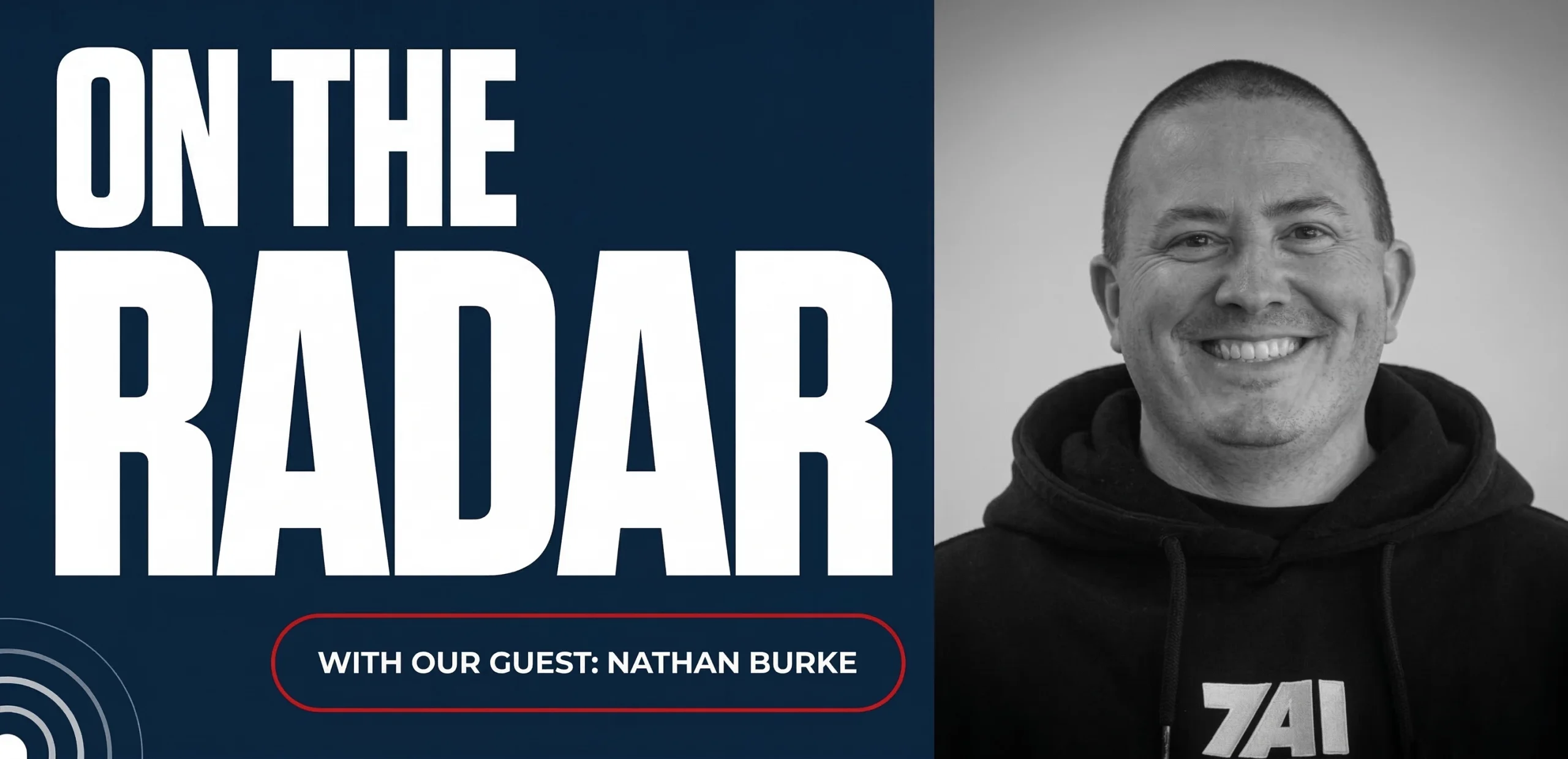
“AI owns production. Humans own experience and taste.” That observation from 7AI Chief Marketing Officer Nate Burke quickly became one of the defining themes of REQ’s recent webinar, AI Unleashed: How Today’s Marketers Are Redefining Creativity, Scale & Impact.
Featuring Burke, Anaconda Senior Vice President of Marketing Derek Weeks, and Sumo Logic Vice President of Corporate Marketing Melissa Beck, the conversation explored a question many marketing leaders are wrestling with right now: How do I adapt as AI moves beyond being a short cut to get work done faster and starts fundamentally changing how my marketing organization operates?
While AI is often framed as a way to create more content, write faster, or automate repetitive tasks, the discussion revealed something much bigger. The most forward-thinking marketing teams aren’t simply using AI to do the same work more efficiently—they’re redesigning workflows, rethinking team structures, improving decision-making, and creating entirely new ways of operating.
And perhaps most importantly, they’re learning where AI adds value and where human judgment still matters most.
The Real Opportunity Isn’t Speed—It’s Removing Friction
One of the strongest themes throughout the discussion was that AI’s greatest value isn’t necessarily producing more content. It’s eliminating the friction that slows teams down.
For Burke, that means using AI to automate everything from board presentations and sales enablement materials to campaign assets and internal communications. At 7AI, many of these workflows have been codified into reusable skills that can automatically generate branded materials in minutes rather than days.
Weeks shared a similar perspective from Anaconda, where AI is increasingly being used to connect systems and surface information that would otherwise take hours to gather. Rather than manually pulling updates from Slack conversations, meeting transcripts, calendars, emails, and project management tools, AI can automatically assemble and summarize information allowing teams to focus on decision-making rather than data collection.
The common thread wasn’t simply efficiency. It was freeing marketers from operational overhead so they could spend more time on strategy, creativity, and business impact.
As Burke described it, AI functions as a “friction remover,”eliminating the tasks that stand between marketers and the work they’re uniquely qualified to do.
As AI Adoption Grows, Governance Is Becoming a Competitive Advantage
Perhaps the most surprising part of the discussion wasn’t about content creation at all. It was about governance.
As AI becomes more deeply embedded in marketing operations, organizations are discovering a new challenge: maintaining consistency while enabling experimentation.
Melissa Beck described how AI adoption has accelerated across her organization, with teams building prompts, workflows, and tools to support everything from presentations to content creation. While that experimentation is valuable, it also creates a new question: How do you ensure everyone is operating from the same source of truth?
That concern resonated across the panel.
Weeks discussed how Anaconda has built shared skills around ideal customer profiles, messaging frameworks, positioning, and competitive intelligence to ensure teams remain aligned regardless of who is creating content. Burke shared how his team encodes brand rules directly into AI systems, creating guardrails that preserve consistency without slowing execution.
The shift represents a significant evolution in how organizations think about brand management.
Historically, consistency was enforced through reviews, approvals, and manual oversight. Increasingly, marketing teams are embedding those standards directly into AI-powered workflows.
In many ways, governance may become one of the most important differentiators between organizations that successfully scale AI and those that struggle with fragmented messaging and inconsistent outputs.
The Future of Marketing May Belong to Teams That Experiment Faster
The panel also highlighted how dramatically AI is lowering the barriers to experimentation.
What once required weeks of planning, production, and testing can now be prototyped in hours. Marketers can generate messaging variations, test creative concepts, repurpose content across channels, and evaluate ideas at a pace that was impossible only a few years ago.
But technology alone isn’t what creates an advantage.
Beck emphasized the importance of building a culture that encourages, supports, and shares experimentation openly across teams. At Sumo Logic, AI adoption is being reinforced through internal communities, training programs, and collaborative learning environments that help employees discover practical applications within their own work.
The result is a shift from isolated innovation to continuous experimentation.
Rather than waiting for perfect answers, leading organizations are creating environments where teams can test, learn, and iterate quickly.
Better Data May Be AI’s Most Underrated Marketing Use Case
While generative content often dominates AI conversations, the panelists repeatedly returned to another area where they’re seeing significant value: data and decision-making.
Weeks described how natural language reporting is making it easier for marketers to access insights without relying on dashboards, analysts, or complex reporting tools. Questions that once required multiple systems and custom reports can increasingly be answered through simple prompts.
Burke shared an even more striking example. By incorporating AI into attribution analysis, his team discovered that more than half of their attribution data was inaccurate. The resulting insights changed how they evaluated marketing performance, allocated budget, and prioritized investments.
For marketing leaders navigating growing complexity, this may ultimately be one of AI’s most transformative capabilities.
Better data leads to better decisions. Better decisions lead to better outcomes.
And AI is increasingly making those insights more accessible than ever before.
The More Powerful AI Becomes, the More Valuable Human Judgment Gets
Despite the enthusiasm surrounding AI, the panelists were remarkably consistent on one point: human creativity remains irreplaceable.
Weeks noted that AI is often very good at understanding the “what” and the “how,” but significantly weaker at understanding the “why.” It can summarize information, generate outputs, and identify patterns, but it struggles to replicate lived experience, emotional intelligence, empathy, and the strategic intuition that often drives the best marketing.
Beck echoed that sentiment, emphasizing that marketers still own audience understanding, creative judgment, and the ability to identify ideas that genuinely resonate.
That perspective also surfaced during a discussion about hiring and career growth.
As AI reshapes marketing roles, technical proficiency will certainly matter, and curiosity may matter even more.
The marketers who will thrive aren’t necessarily the ones who are the most advanced at prompting or have the deepest technical expertise. They’re the people willing to experiment, learn continuously, challenge assumptions, and explore new possibilities. In many ways, AI is elevating the importance of distinctly human skills rather than diminishing them.
Without question, the technology is advancing rapidly and along with it the need for judgment, creativity, and strategic thinking.
Looking Ahead
If there was one conclusion that emerged from the discussion, it’s that AI is no longer a future consideration for marketers.
It’s already reshaping how teams create, collaborate, analyze, and execute.
The organizations seeing the greatest impact aren’t treating AI as a content tool. They’re using it to rethink how marketing gets done, from governance and workflows to reporting, experimentation, and strategic decision-making.
And while the technology will continue to evolve marketing operations, one thing remains clear: the most successful marketing teams will be those that combine the speed and scale of AI with the creativity, judgment, and curiosity that only humans can provide.
Watch the Full Webinar Recording
Want to hear the full conversation?
Head over to the AI Unleashed: How Today’s Marketers Are Redefining Creativity, Scale & Impact webinar page to watch the recording and hear Nate Burke, Derek Weeks, Melissa Beck, and Lisa Throckmorton discuss the AI workflows, governance strategies, attribution models, and experimentation frameworks they’re implementing today.
Ready to Explore What AI Could Mean for Your Marketing Organization?
Whether you’re evaluating AI tools, developing governance frameworks, scaling content production, or rethinking marketing operations, REQ can help.
Connect with our team to discuss how AI can drive greater creativity, efficiency, and business impact across your organization.