Language allows us to communicate ideas and feelings. It’s allowed humankind to join together and thrive. But over time, our language has developed to emphasize certain groups while excluding others. Read on to understand how inclusive language can help us reconnect with our team members and audiences through the content we create.
What is Inclusive Language?
The language we use can unintentionally exclude groups. While this is often a result of habitual expressions that have been baked into our language, culture, or society over time, these words can seem insensitive and alienating. Non-inclusive language can even hinder equal opportunities as people are left out of regular and important conversations.
Inclusive language aims to root out the bias in our words to show greater respect to all people, no matter their race, gender, ability, or sexual identity. It goes far beyond “saying the right thing” or “being politically correct.” Truly impartial language requires a conscious effort to use neutral language and to avoid slang and assumptions. Instead of relying on the well-meaning intentions of our words, we choose to evaluate how our words may be received and use them with care.
Why is Inclusive Language Important in Content?
Creating more inclusive content involves ongoing effort, but you stand to make huge gains from extending your message to more groups. When your team members feel more included at your organization through internal communications and job ads, you encourage more diversity in the workplace. This has been proven to boost organizational productivity, as employees feel a greater sense of appreciation and comfort at work.
What’s more, an engaged and diverse team will be able to understand and communicate with customers who share their different backgrounds. This can help more of your target audience to relate to your company and trust your brand messaging, leading to more sales and stronger ambassadorship. A Wunderman study revealed that 79% of consumers only buy from brands that make them feel wanted, understood, and cared for. Inclusivity is sorely lacking in content marketing, which means companies miss out on the opportunity to engage underrepresented groups with a buying power of $3.9 trillion in the US alone.

How Can You Use More Inclusive Language in Content?
Using more inclusive language doesn’t mean worrying over every word you write. With a different approach to the language you use, you can transform your internal and marketing texts into more welcoming pieces of writing. Here’s how you can get out of the habit of using certain words and include all your readers in your communication.
Start with Inclusive Content in the Workplace
Inclusive content is easier to write if you’re part of an open and inclusive team. By making inclusivity a bedrock of your internal communication, the marketing content your team creates will naturally become more inclusive.
In addition to ensuring and welcoming diversity within your team, you can develop inclusive language guidelines for your brand. Promote inclusivity within all internal communication channels with an inclusive language list. For example, if your team uses Slack, set up the Slackbot to detect non-inclusive language in messages so employees have a chance to rephrase them. You can also provide the option to add personal pronouns in email signatures by leading by example.
Make Your Content Clearer
No matter whether you’re writing your next blog post or your company newsletter, clarity can instantly add more inclusivity to your texts.
To start off, avoid acronyms or jargon in your writing. Not only can this alienate new members of your team, but your customers may also be unsure what you offer and assume that it’s not what they’re looking for. Instead of trying to show off your expertise through industry buzzwords, use specific and unambiguous vocabulary. If certain information isn’t relevant, however, there’s no need to include it in your content. Use neutral job titles in your job descriptions and team communications, for example, as it shouldn’t matter whether you’re writing about a male or female engineer.
Today, most content contains visual aspects to help communicate the message and improve user experience. Ensure all graphics and images represent your employees, target audiences, and other stakeholders. If people can’t see themselves represented in your content, they may find it difficult to imagine themselves working with you or buying from you. What’s more, your web content should be designed so that it is operable for all users. Add alt text for images which can be read by a screen reader, captions for videos, and considerations for those who have color blindness.
Use the Most Inclusive Words in Key Areas
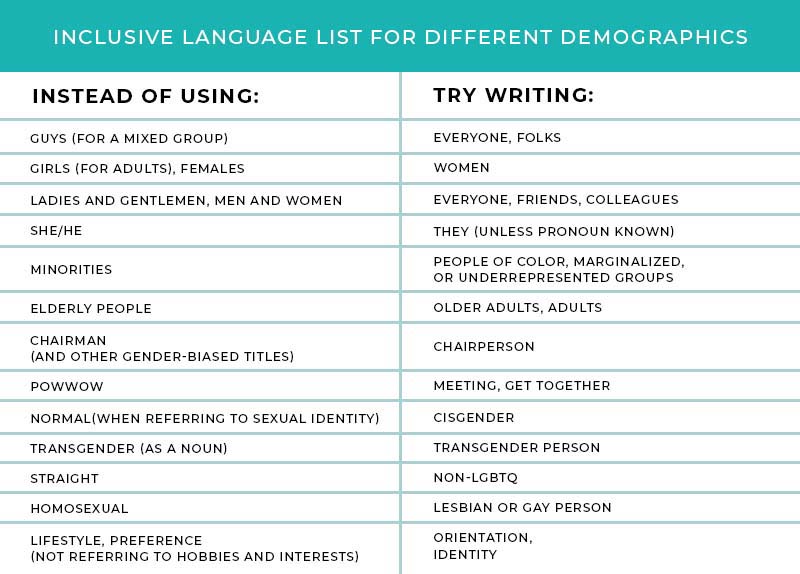
The following inclusive language lists can help you include more groups in your internal communications and content marketing. Just keep in mind that not all groups agree on what is most inclusive and that language develops over time. You’ll need to revisit your choice of words and phrases regularly, but this will be a great start.
Language for Different Demographics
We often refer to age, gender, and race in content when it simply isn’t relevant or accurate. Take, for example, the common usage of the word “guys” when addressing a group of people or a gender-biased job title such as “chairman.” If you’re writing about a specific individual, it’s always better to ask them how they want to be identified. If demographics are irrelevant to your message, don’t add details or use phrases that would needlessly exclude entire social groups.
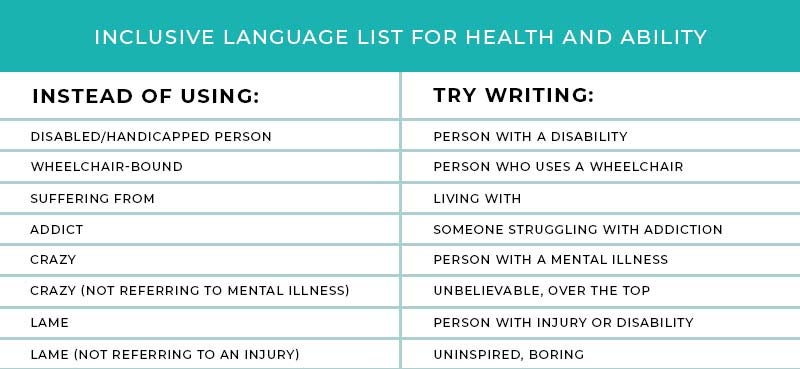
Language for Health and Ability
When it comes to addressing mental, physical, and emotional health, it’s a question of balance. Your content needs to recognize these issues without promoting victimhood. One way to do this is to use “people-first language,” which ensures the individual is seen first, as a person, rather than as a condition. However, not everyone prefers “people-first” language for themselves, so always be sure to check with individuals when possible.
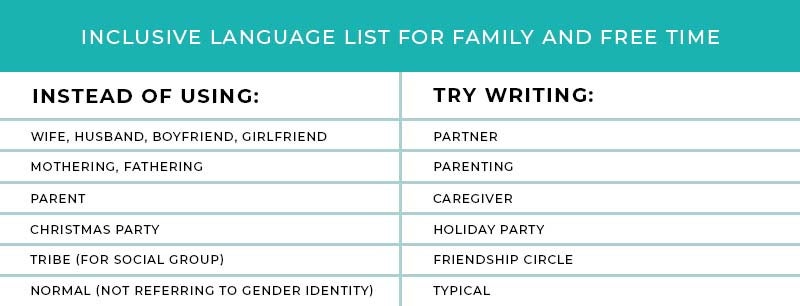
Language for Family and Free Time
Your team members and target audience likely have very different personal lives and it’s important to create an open space for everyone. Reliance on gender-biased family names can discourage team members from opening up about their free time, while content marketing that only celebrates Christian holidays can leave some customers feeling forgotten.
No matter whether you’re asking a coworker how they spent their weekend or launching a customer appreciation event over the holidays, be mindful not to project your own living situation onto other groups with your words.
Writing more inclusively takes time and constant relearning, but the results will be worth it. By demonstrating the importance of inclusivity at your company, you won’t just create a more welcoming workplace—you’ll also be able to share your product or service with everyone who could benefit from it.