E-Tourism How Travel Tech Has Changed Our Trips

by

• Article

3–5 minutes

read

As we wave so long to summer 2017, it’s a good time to review how booking travel has evolved thanks to advances in travel tech. Whether it’s a weekend trip to see distant friends or a 3-week long backpacking trip in Europe, June through September are the most popular months to do so. In 2015, 45% of Americans took a summer vacation, and the percentage of adults taking a summer break increased to 65% in 2016. However, travel season will see another surge with the upcoming holidays not too far off. What can the evolution of booking travel for summer vacations tell us about the e-tourism landscape overall?

The Evolution of Summer Vacation

Taking a trip has always been a chance to relax and explore while either connecting with yourself or loved ones. Over the course of 20 years, planning, taking, and sharing trips has simply become easier thanks to the improvements in travel technology. When comparing the two summer breaks below, it’s easy to see the goals have stayed the same, but the travel trends have changed:

The Summer of ‘97

You’ve just gotten back from your family vacation to the Bahamas from a trip package your travel agent recommended. You head home with stories to share with loved ones the next time you catch up – stories you’ll tell hundreds of times until everyone has asked how about your vacation. You have a stock of film to develop for pictures to show friends, frame, and scrapbook. It takes a lot of effort to share your Bahamas vacation, but it’s worth it. Your trip sounds so awesome that friends are asking for the name of the resort for their next trip.

The Summer of ‘17

You’ve just checked out of your 5-star rated Airbnb in the Bahamas, and check your phone for any updates while on the way to the airport. While scrolling through Facebook, you see Jessica has uploaded a 37-photo album of the elephants she fed in Bali. Tom started a live video of the show he’s attending in Amsterdam. Peter shared a photo on Instagram of him holding a koala in Australia with over 500 likes. It’s almost as if you’re on vacation with your friends on their trips too! In fact, you’ve already started planning a trip to Sydney after that koala post.

From Travel Agencies to e-Tourism

“…e-tourism refers to a phenomenon and research area in which the adoption of information and communication technology (ICT) by tourists and businesses transforms the processes and the value chains in the tourism industry. This development changes the process within a business or organization while reconfiguring the landscape of commerce.” – The Encyclopedia of Tourism

In simpler terms, the travel industry adapts to the changing preferences and travel trends of tourists. The way we now plan our trips has been altered by the introduction of new travel technology, and tourism companies must react quickly to retain customers. As information is increasingly available at our fingertips with people spending more time on mobile devices, the travel industry must be prepared for people booking their vacation from the bar/office/beach/bedroom at all times of the day.

On the tourist side of the travel tech evolution, taking a trip has never been easier. The way we research, book, and share our vacations has become a seamless cycle. Discover a new destination, research travel options, book a trip, share your experiences, and help someone discover a new destination for themselves.

Researching the Trip

Then: Generalized Packages
Now: Big Data Personalization

Trying to book a full trip can become overwhelming. From hotels to transportation, every single component of your vacation can be time-consuming – especially without the help of a computer. Luckily, travel agencies were there to offer package deals. Though generally, you could book the package and plan your trip in one, quick purchase. Less personalization, but less hassle.

In today’s world, we see people enjoy having unique and personalized experiences. Packaged trips were wonderful at the time, but now we want our trips to match our travel preferences. We are all about traveling for the experience, after all. Big data allows the travel industry to target your interests to provide the “ideal” travel itinerary. Hyper-personalized travel deals cut down the work for the traveler, and increase the chance of conversion for the company.

When booking travel, consumers will always be concerned with convenience, cost, and customization. As the tourism industry continues to evolve, companies must too adapt.
The CMO Who Gave Up Sales Pitches to Build Real Relationships

The CMO Who Gave Up Sales Pitches to Build Real Relationships

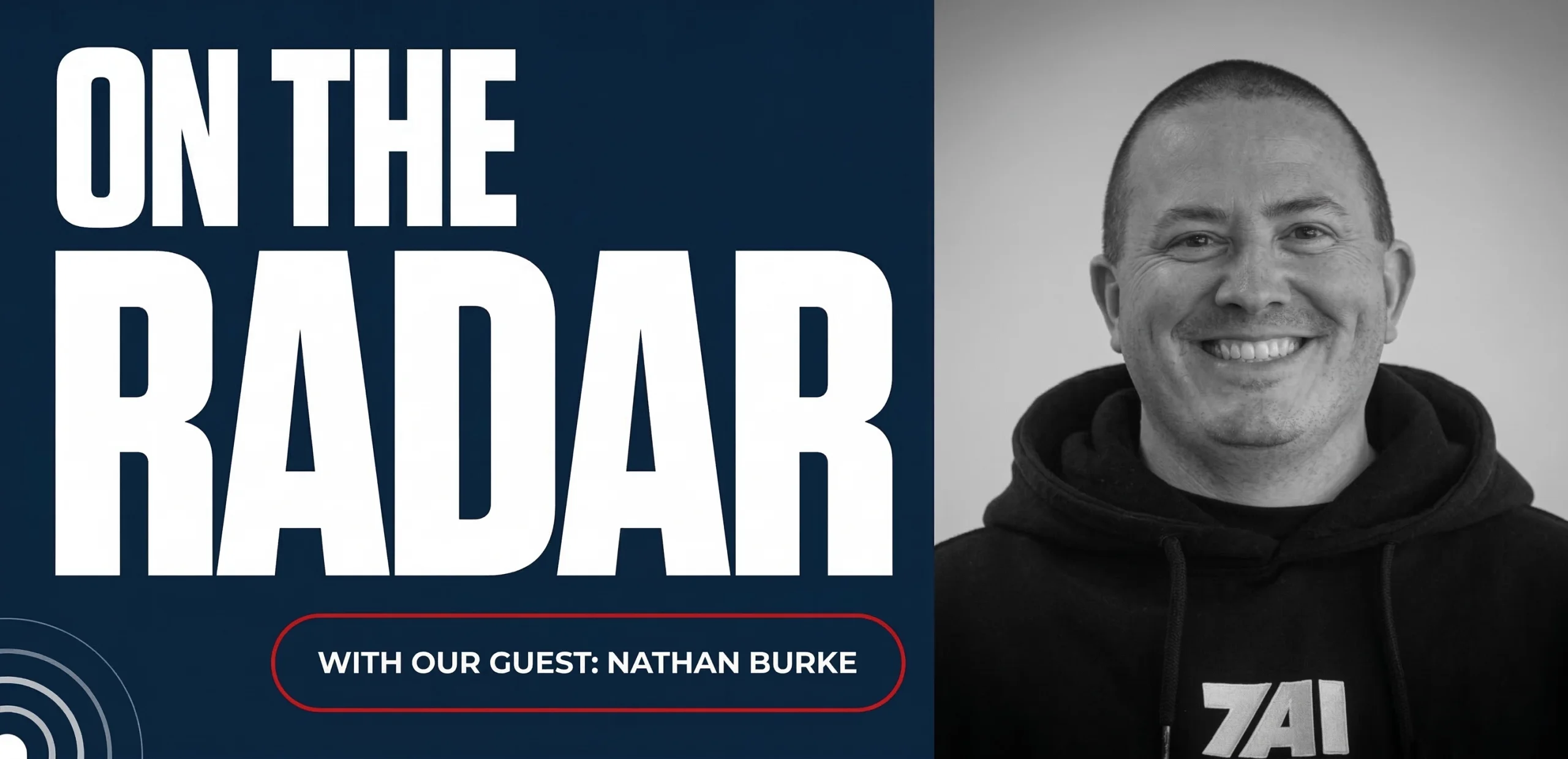
Chatting with Nathan Burke of 7AI on why relationship-building outperforms traditional B2B marketing Nathan Burke is intentionally doing less of what most B2B marketers are taught to do. As CMO of 7AI, he’s opting out of the usual B2B playbook, the awkward steak dinners with a pitch attached, the conference badge scanning arms race, and…

How UVEye’s Unicorn Drives Trade Show Excitement

How UVEye’s Unicorn Drives Trade Show Excitement

Trade shows are crowded. Competitive. Expensive. Every booth promises innovation. Every brand is trying to stand out to the sea of overwhelmed and tired attendees. For AI-driven vehicle inspection company UVEye, standing out meant not just thinking creatively. It meant creating a unicorn. UVEye calls its technology an “MRI for cars.” It provides AI-driven technology that…

How WalkMe’s Melanie Pasch Humanized the Enterprise AI Adoption Problem with “AI Shame”

How WalkMe’s Melanie Pasch Humanized the Enterprise AI Adoption Problem with “AI Shame”

Ask an executive how many software applications their company uses, and they’ll probably guess 30 or 40. The average organization, according to research by digital adoption platform (DAP) pioneer WalkMe, actually runs about 625 applications. This staggering digital ecosystem is where most tech investments stall, not because the technology is poor, but because employees can’t…

From $200M ARR to Pre-Seed: How Karina Lawrence Rewrites the Marketing Playbook for Early-Stage Startups

From $200M ARR to Pre-Seed: How Karina Lawrence Rewrites the Marketing Playbook for Early-Stage Startups

When you’ve helped scale a developer-focused company from roughly $200M to nearly $250M in ARR, you know what “grown-up” marketing looks like. Today, though, Karina Lawrence is back at the very beginning—leading marketing at Macrovo, a pre-seed, ~10-person startup that blends AI and human expertise to help financial institutions make faster, smarter decisions. It’s a…

B2B Videos You Actually Want to Watch? Meet Jared Evers of Medallia.

B2B Videos You Actually Want to Watch? Meet Jared Evers of Medallia.

For Jared Evers and his small and scrappy content team at Medallia – provider of customer and experience software – if you can’t do something stellar, there’s no sense in doing it at all. For proof, check out how the team is pushing the boundaries of corporate videos with Experience Now, Medallia’s own streaming platform.…

How HII’s Jaime Orlando Builds Connection, Culture, and Momentum Inside a Legacy Brand

How HII’s Jaime Orlando Builds Connection, Culture, and Momentum Inside a Legacy Brand

Q: Jaime, for those who might not know HII Mission Technologies, can you give us a quick overview of what your team does? Jaime Orlando Absolutely. HII as a company has an incredible legacy. It’s America’s largest shipbuilder, with more than 135 years of experience. About 75% of HII’s business comes from shipbuilding at our…

How Jenifer Kern Helped Qu Redefine Restaurant Tech

How Jenifer Kern Helped Qu Redefine Restaurant Tech

On the Radar sat down with Jenifer Kern, CMO of Qu, to talk about how she helped create a new category in restaurant technology, why maintaining industry focus has been key to business growth, and what it means to elevate marketing in a longstanding industry undergoing rapid transformation. Q: When you joined Qu, what did the industry…

From The New York Times to Muck Rack: Linda Zebian on Knowing What’s Newsworthy

From The New York Times to Muck Rack: Linda Zebian on Knowing What’s Newsworthy

Linda Zebian knows how to tell a good story. As VP of Communications at Muck Rack, she leads a lean, high-impact team responsible for brand, content, product marketing, internal comms, and more. Her approach is grounded in the instincts she developed over 10 years in corporate comms at The New York Times, where she learned…

How Sam Baldridge is Turning Culture Into a Competitive Edge

How Sam Baldridge is Turning Culture Into a Competitive Edge

At Applied Systems, Sam Baldridge wears a lot of hats. Officially, she’s the Senior Communications and Culture Specialist. Unofficially, she might be better known as the “Vibes Director.” Sam is part of a small but mighty three-person team tasked with building internal connection, shaping employer branding, and turning culture into a competitive advantage.  We caught…

How Kristina McConnell Uses Precision and AI to Power Account-Based Marketing at H1

How Kristina McConnell Uses Precision and AI to Power Account-Based Marketing at H1

A Director of Marketing at H1, Kristina McConnell brings structure, creativity, and a test-and-learn mindset to every campaign she touches. With a small team and a niche audience in the pharma space, she has helped transform H1’s account-based marketing (ABM) approach into a tightly aligned, data-driven engine. Her team goes far beyond basic alignment with sales.…

CONTACT US
CONTACT US

WE HELP BRANDS OWN WHAT’S NEXT

Our integrated PR and digital campaigns build reputations, drive growth, and shape conversations that define markets. Let’s talk about how we can help you do the same.