Go Digital: Create a Guidebook for Your Hotel Guests

by

Article ,
3–4 minutes

read

It should come as no surprise that 88% of U.S. adults prefer booking hotels online. It’s a digital world; we’re just living in it.

Customized mobile additions and improvements are popping up all over the hospitality industry from booking to in-room services to the post-experience. Mobile communication has become the norm. Anyone who isn’t following suit to what is now nearly required of hotels helps narrow down the choices for every potential guest.

When it comes to booking travel, accommodations, in particular, there is a myriad of choices and considerations. These include cost, amenities, location, value, experience, and the list goes on and on. In some cases, this information is spread across multiple web pages, hard to find, and makes the user want to scroll to the next possible solution.

Simply having an online presence is no longer enough. To excel, you have to stand out when it comes to hospitality digital marketing. For starters, you can create a guidebook for your guests highlighting your best of the best without omitting crucial information.

Digital hotel guidebooks can answer commonly asked questions by people booking travel and accommodations. Customize your hotel marketing guidebook to highlight the best of your amenities. Then, add a personal touch to show guests you not only care about their stay but their overall experience, which helps you stand apart from competitors, including OTAs.

What to Include in Your Online Hotel Guidebook

The length of a digital guidebook matters less than the relevancy of its content. Unsure of where to begin? Here’s a simple outline to follow and customize for your audience.

Page 1: Basics

Start with the basics of your offerings, such as room size, cost, proximity near the city center, and other major attractions. What is most important to your guests? Review guest feedback as a team, track your website analytics, and see what pages are visited most frequently or what content creates the most engagement. This will begin to give you insights on how to shape your message for your hotel guidebook.

Page 2: Benefits

Next, jump right into your property’s benefits. For example, if your hotel is known for hosting mainly business travelers, dedicate a page to business amenities (WiFi speed, conference rooms, spacious guest rooms, airport shuttles, etc.) that will help make their experience more convenient.

Alternatively, if your hotel is geared toward families, include amenities that may appeal most to them like a swimming pool, concierge services to schedule transportation to theme parks, buffet breakfasts, and more.

Complement the information with beautiful visuals of your property, amenities, and city. Let your potential guest feel what it would be like to stay at your hotel.

Page 3: The Experience

Include a section that highlights events in your area or city. People gather travel information from various sources; wouldn’t it be nice if they could get a snapshot of a possible itinerary, courtesy of your hotel? Showcase the big events happening in your city, but also the local flavors they might not immediately find in their online research.

Create different versions of your online, hotel guidebook for your various audiences. If you plan to use this guidebook as part of your hospitality digital marketing efforts, such as an email campaign, slightly alter the message to accommodate different needs. Also, think about updating your guidebook on a seasonal basis so that it’s always relevant to the reader.

Page 4: The Feeling

When people go on vacation, they want to feel something. Usually, it’s relaxed, but it can go even further than that. The feeling might be celebratory, relief, joy – what you offer should evoke feeling from your guests. That’s what makes people want to return to your location again and again.

Will your guidebook make them even more excited to plan their trip? Will it provide value as they create itineraries? Hotel guidebooks don’t have to be lengthy. Make them informative, engaging, and use them as a chance to show your property in the best possible light.
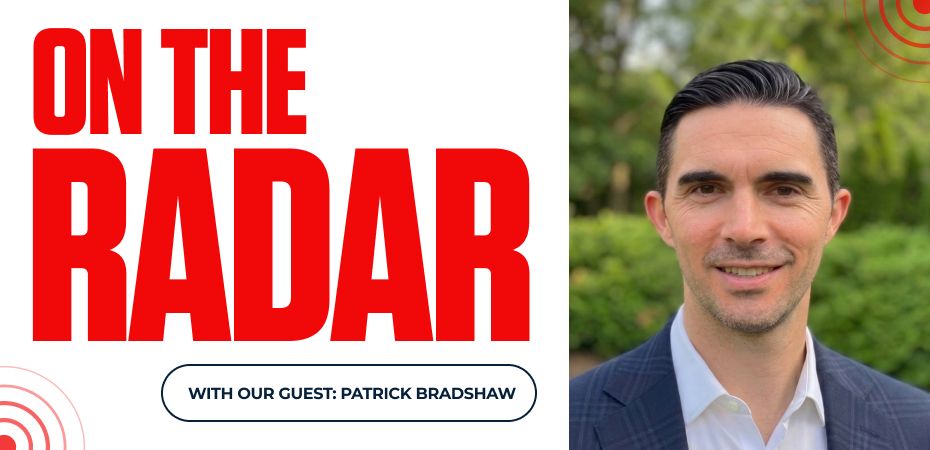
How Patrick Bradshaw Is Bringing Marketing Into the Deal

How Patrick Bradshaw Is Bringing Marketing Into the Deal

Sales enablement has traditionally focused on preparing reps with content, training, and playbooks before a deal begins. Patrick Bradshaw, Sr. Director of Acquisition and Growth Marketing at Highspot, says that the model is evolving as AI and better data make it possible to support teams up to the end of the sales process. We caught…

The CMO Who Gave Up Sales Pitches to Build Real Relationships

The CMO Who Gave Up Sales Pitches to Build Real Relationships

Chatting with Nathan Burke of 7AI on why relationship-building outperforms traditional B2B marketing Nathan Burke is intentionally doing less of what most B2B marketers are taught to do. As CMO of 7AI, he’s opting out of the usual B2B playbook, the awkward steak dinners with a pitch attached, the conference badge scanning arms race, and…

How UVEye’s Unicorn Drives Trade Show Excitement

How UVEye’s Unicorn Drives Trade Show Excitement

Trade shows are crowded. Competitive. Expensive. Every booth promises innovation. Every brand is trying to stand out to the sea of overwhelmed and tired attendees. For AI-driven vehicle inspection company UVEye, standing out meant not just thinking creatively. It meant creating a unicorn. UVEye calls its technology an “MRI for cars.” It provides AI-driven technology that…

How WalkMe’s Melanie Pasch Humanized the Enterprise AI Adoption Problem with “AI Shame”

How WalkMe’s Melanie Pasch Humanized the Enterprise AI Adoption Problem with “AI Shame”

Ask an executive how many software applications their company uses, and they’ll probably guess 30 or 40. The average organization, according to research by digital adoption platform (DAP) pioneer WalkMe, actually runs about 625 applications. This staggering digital ecosystem is where most tech investments stall, not because the technology is poor, but because employees can’t…

From $200M ARR to Pre-Seed: How Karina Lawrence Rewrites the Marketing Playbook for Early-Stage Startups

From $200M ARR to Pre-Seed: How Karina Lawrence Rewrites the Marketing Playbook for Early-Stage Startups

When you’ve helped scale a developer-focused company from roughly $200M to nearly $250M in ARR, you know what “grown-up” marketing looks like. Today, though, Karina Lawrence is back at the very beginning—leading marketing at Macrovo, a pre-seed, ~10-person startup that blends AI and human expertise to help financial institutions make faster, smarter decisions. It’s a…

B2B Videos You Actually Want to Watch? Meet Jared Evers of Medallia.

B2B Videos You Actually Want to Watch? Meet Jared Evers of Medallia.

For Jared Evers and his small and scrappy content team at Medallia – provider of customer and experience software – if you can’t do something stellar, there’s no sense in doing it at all. For proof, check out how the team is pushing the boundaries of corporate videos with Experience Now, Medallia’s own streaming platform.…

How HII’s Jaime Orlando Builds Connection, Culture, and Momentum Inside a Legacy Brand

How HII’s Jaime Orlando Builds Connection, Culture, and Momentum Inside a Legacy Brand

Q: Jaime, for those who might not know HII Mission Technologies, can you give us a quick overview of what your team does? Jaime Orlando Absolutely. HII as a company has an incredible legacy. It’s America’s largest shipbuilder, with more than 135 years of experience. About 75% of HII’s business comes from shipbuilding at our…

How Jenifer Kern Helped Qu Redefine Restaurant Tech

How Jenifer Kern Helped Qu Redefine Restaurant Tech

On the Radar sat down with Jenifer Kern, CMO of Qu, to talk about how she helped create a new category in restaurant technology, why maintaining industry focus has been key to business growth, and what it means to elevate marketing in a longstanding industry undergoing rapid transformation. Q: When you joined Qu, what did the industry…

From The New York Times to Muck Rack: Linda Zebian on Knowing What’s Newsworthy

From The New York Times to Muck Rack: Linda Zebian on Knowing What’s Newsworthy

Linda Zebian knows how to tell a good story. As VP of Communications at Muck Rack, she leads a lean, high-impact team responsible for brand, content, product marketing, internal comms, and more. Her approach is grounded in the instincts she developed over 10 years in corporate comms at The New York Times, where she learned…

How Sam Baldridge is Turning Culture Into a Competitive Edge

How Sam Baldridge is Turning Culture Into a Competitive Edge

At Applied Systems, Sam Baldridge wears a lot of hats. Officially, she’s the Senior Communications and Culture Specialist. Unofficially, she might be better known as the “Vibes Director.” Sam is part of a small but mighty three-person team tasked with building internal connection, shaping employer branding, and turning culture into a competitive advantage.  We caught…

CONTACT US
CONTACT US

WE HELP BRANDS OWN WHAT’S NEXT

Our integrated PR and digital campaigns build reputations, drive growth, and shape conversations that define markets. Let’s talk about how we can help you do the same.