December 17, 2025
| On the Radar | by Pete Larmey | Content,
Public Relations,
Social Media,
Technology
How WalkMe's Melanie Pasch Humanized the Enterprise AI Adoption Problem with “AI Shame”
Ask an executive how many software applications their company uses, and they’ll probably guess 30 or 40. The average organization, according to research by digital adoption platform (DAP) pioneer WalkMe, actually runs about 625 applications. This staggering digital ecosystem is where most tech investments stall, not because the technology is poor, but because employees can't navigate the complexity – or they abandon tools because they failed to give the right answer.
For Melanie Pasch, WalkMe's Global Director of Public Relations and Corporate Communications, this complexity is fundamentally a human problem. She views the company's decade-long mission to make "technology work for people, not the other way around" as more vital than ever in the age of enterprise AI.
We spoke with Pasch about how WalkMe’s research has established a human-centric narrative for AI adoption, highlighting a phenomenon she helped bring to light: "AI shame."
Q: Walk us through WalkMe’s efforts to help people navigate complex software.
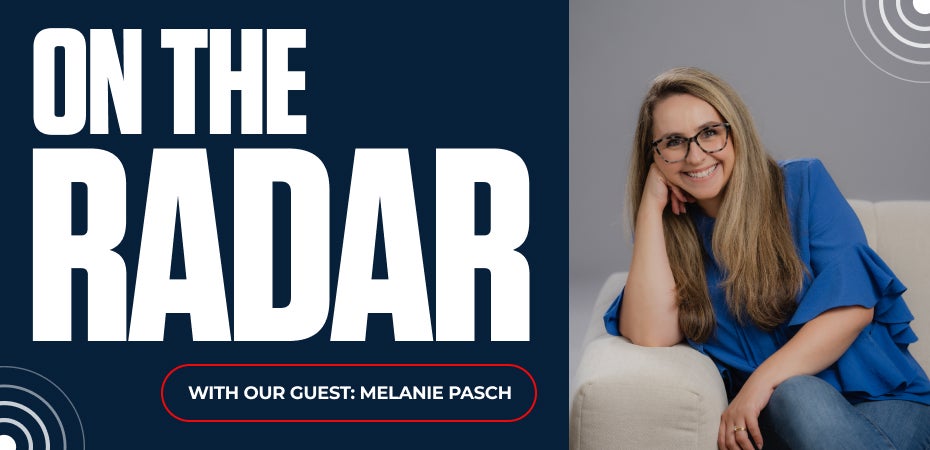
Melanie Pasch
WalkMe began over a decade ago, making digital experiences simple, productive, and effective. That idea became the foundation of the digital adoption platform (DAP) category.
Despite having more powerful technology than ever, many companies still see disappointing ROI from their technology investments. The problem isn’t the technology itself, but the friction and change-management challenges embedded in everyday workflows. Many of the 600+ applications in use in the average large enterprise have their own AI capabilities, but they are largely locked away inside these different apps. The experience for the individual has been a wild ride: conflicting mandates on AI use, enthusiasm without guidance, and AI fearmongering are commonplace.
WalkMe’s AI-powered DAP meets people right where they are across applications and workflows to provide guidance and automation that removes that friction. So not only can WalkMe transform the ease of work for individuals and drive efficiency and ROI from existing tech investments, but we have also become experts in human-computer interaction.
WalkMe understands how people interact with technology, where they struggle, and how to make employees thrive digitally at scale. Combine that with our proprietary AI, known as DeepUI, and WalkMe brings critical contextuality to transform the impact of AI implementations. This is the technology powering SAP’s Joule action bar, allowing it to provide contextual AI assistance both inside and outside of SAP applications across the digital workplace.
Q: WalkMe’s recent AI in the Workplace survey generated significant global attention. What did you learn from that experience?
Melanie Pasch
This survey became one of the most impactful communications initiatives we’ve undertaken. Within the first week, the survey has reached an estimated 1.3 billion people and earned more than 100 global media placements. It also marked the first time WalkMe had dedicated feature stories in both Fortune and Forbes.
The survey found that employees feel pressured to pretend they understand or use AI tools, even when they don’t. That’s a phenomenon we call “AI shame,” something I think everyone can relate to. Fascinatingly, we also found that almost an equal amount of working Americans admit to hiding their AI use for fear of judgment or scrutiny. 78% admit to using unsanctioned AI tools at work.
Fortune ran a major feature on AI shame, and soon outlets ranging from Digital Journal to the Times of India were covering it. Coverage also took off in Israel after YNet highlighted the findings, which led to a primetime radio interview with WalkMe’s CHRO.
Our press release was syndicated across platforms like Yahoo! Finance, AOL, and MSN, and the findings were covered by SAP News Center, HR Tech Series, WorkLife, No Jitter, and many more. The Financial Times cited WalkMe’s research alongside Deloitte and KPMG in a feature on employee confusion about AI rules.
A good indication that we were beginning to really lead the conversation on enterprise AI adoption was when HR Magazine reached out for comment after Google announced its £5B investment in AI in the UK. Meanwhile, Salesforce cited WalkMe research when announcing its AgentForce IT service. Soon, top-tier publications were coming to us because WalkMe had become an authority in the enterprise AI space.
Q: You’ve also published your annual State of Digital Adoption report. How do you leverage these surveys in your marketing to keep WalkMe leading the conversation?
Melanie Pasch
We view these surveys as long-term narrative engines. For example, the 1,600% visibility gap between the amount of applications enterprise leaders believe to be in use across the organization (37) versus the amount actually in use (625) provides concrete data that instantly anchors conversations about enterprise technology complexity, adoption, and the employee experience.
We use those insights in media interviews, executive messaging, speaking engagements, and content programs. Perhaps most importantly, it helps our sales teams articulate the scope of the problems we solve. The insights give us a credible, repeatable way to frame the challenges enterprises face and to introduce ideas the industry can rally around.
Since this is an annual report, the trend data is fascinating. We like to have a wealth of human-centered data to mine and curate, contributing to the overarching conversation and keeping WalkMe positioned as a consistent and authoritative voice.
Q: With WalkMe now helping shape the global AI conversation, what’s next from a marketing and communications perspective?
Melanie Pasch
We’re expanding how we use our research across more channels, including webinars, social media, and internal enablement, so our sales and marketing teams can put these insights to work. For example, we’ve already shared findings from our AI in the Workplace Survey at the SAP Transformation Excellence Summits in the U.S. and Europe, and the AI survey is now an annual initiative that will continue to inform our thought leadership. We’re also constantly looking for new ways to add to the wider understanding of and conversation around AI adoption in the workplace.
Working for an AI company has transformed me professionally. I wrote about it in VentureBeat. If you had told me even a year ago that I would build my own custom GPTs to help me work better and more efficiently, I would probably have laughed. Now, I’ve been there, done that.
WalkMe is a very AI-forward organization. Our leadership actively encourages experimentation, and that culture of curiosity has empowered me to take risks in redefining our entire corporate communications program. I’ve leaned into AI tools and shattered every meaningful PR record we had at WalkMe over the past year. I credit a lot of that to what I was able to learn from my own manager, Ofir Bloch. In a 20-minute conversation, Ofir taught me the basics of how he uses AI and that changed my entire year. At WalkMe, it’s not a question of whether we’re going to transform the way we work with AI; it’s a matter of how.
WalkMe is a great example of a company using research, insights, and AI innovation to amplify its messaging and impact industry discourse. Reach out to us to learn how your organization can succeed with a similar approach.