March 17, 2026
| On the Radar | Branding,
Content,
Public Relations
On the Radar: The CMO Who Gave Up Sales Pitches to Build Real Relationships
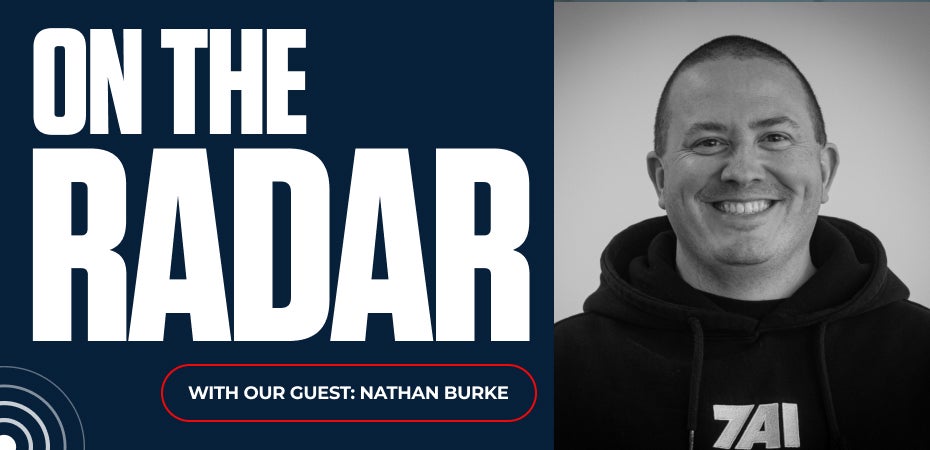
Chatting with Nathan Burke of 7AI on why relationship-building outperforms traditional B2B marketing
Nathan Burke is intentionally doing less of what most B2B marketers are taught to do. As CMO of 7AI, he’s opting out of the usual B2B playbook, the awkward steak dinners with a pitch attached, the conference badge scanning arms race, and the “take a meeting, get free AirPods” routine. Instead, he’s focused on building real relationships, creating community, and earning trust long before a product ever enters the conversation.
We sat down with Nate to talk about what he calls “scalable intimacy,” why selling too early kills trust, and what happens when you stop planning meetings and start building relationships.
Q: You’ve been very vocal about not “selling” in the early days. Why?
Nathan Burke
Most vendor marketing feels like a timeshare presentation. You sit through the pitch to get the steak dinner, and everyone knows what’s happening. We wanted to do the opposite. Just last night, we hosted our second annual dinner at an amazing omakase sushi restaurant in Boston. We flew in customers and prospects and put everyone up at an incredible hotel. It was an eighteen-course sushi meal, and do you know how much of a sales pitch we did? Zero.
Instead, we just thanked people for being there. If anyone wanted to talk about the product, we were around. But the real point was bringing people together to eat really great food and enjoy each other’s company. That’s the shift for me. I want to have a texting relationship with our customers and even with people who may never buy from us. I’m not trying to sell them anything. But when they have a problem, it’s a no-brainer who they come to.
Q: You’ve done big, unconventional brand moments before, like partnering with Simone Biles in your previous job. Tell me about that experience.
Nathan Burke
It started with a really simple problem. Most of our market had never heard of us, and we needed a message people could actually remember. We asked ourselves who truly represents overcoming pressure at the highest level. For us, that was Simone Biles. When she said yes to partnering, I couldn’t believe it.
One of the first things we did was an in-person event where we hosted an absinthe tasting, and Simone literally got behind the bar and started bartending. It was one of those moments where you just knew people would never forget it. From there, we did some podcast episodes and video, but then we stepped back and said, this is all kind of standard. How do we do something bigger and more meaningful?
That’s when we added a charity component tied to an organization she works with that provides professional mentors to kids in foster care. We built a campaign, brought in another athlete, and surprised Simone with a $50,000 donation. It had absolutely nothing to do with cybersecurity, and that was the point. People connected with it because it felt real.
Q: You also started a podcast before you even launched a product. Why did that work?
Nathan Burke
I thought we were late to the podcast game, but it’s been one of the best things we’ve done. There have been at least three episodes where we invited someone on who was already talking about AI and security and they didn’t even know who we were, and by the end of the conversation they became a customer. It keeps happening because we’re not talking about the product at all, zero. We’re just going after this new breed of CISO who wants to break stuff and think differently. I always ask them, if I had a magic wand and could give you back 25 percent of your time, what would you do? Nobody hesitates. They always have an answer, and that’s where the real conversation starts.
Q: With a marketing team of two, how are you using AI to punch above your weight?
Nathan Burke
One of the most impactful things we built is an AI workflow that preps our reps before every call. I hate the idea of showing up and asking generic, open-ended questions when you could already know so much about the person on the other side. So we built something that pulls in signals like what they’ve said publicly about AI, what they’ve posted on LinkedIn, and, if they’re a public company, what they’ve disclosed in filings. That way the conversation starts with, “I saw you talking about this specific thing,” instead of, “So, do you use AI?” It completely changes the dynamic of the call and makes it feel like a real conversation, not a sales script.
Closing Thought
For Nathan Burke, the lesson is simple: relationships scale in ways funnels never will. Whether it’s an eighteen-course sushi dinner with zero pitch, a podcast conversation that naturally turns into a partnership, or AI workflows that make conversations smarter from the start, the throughline is trust.