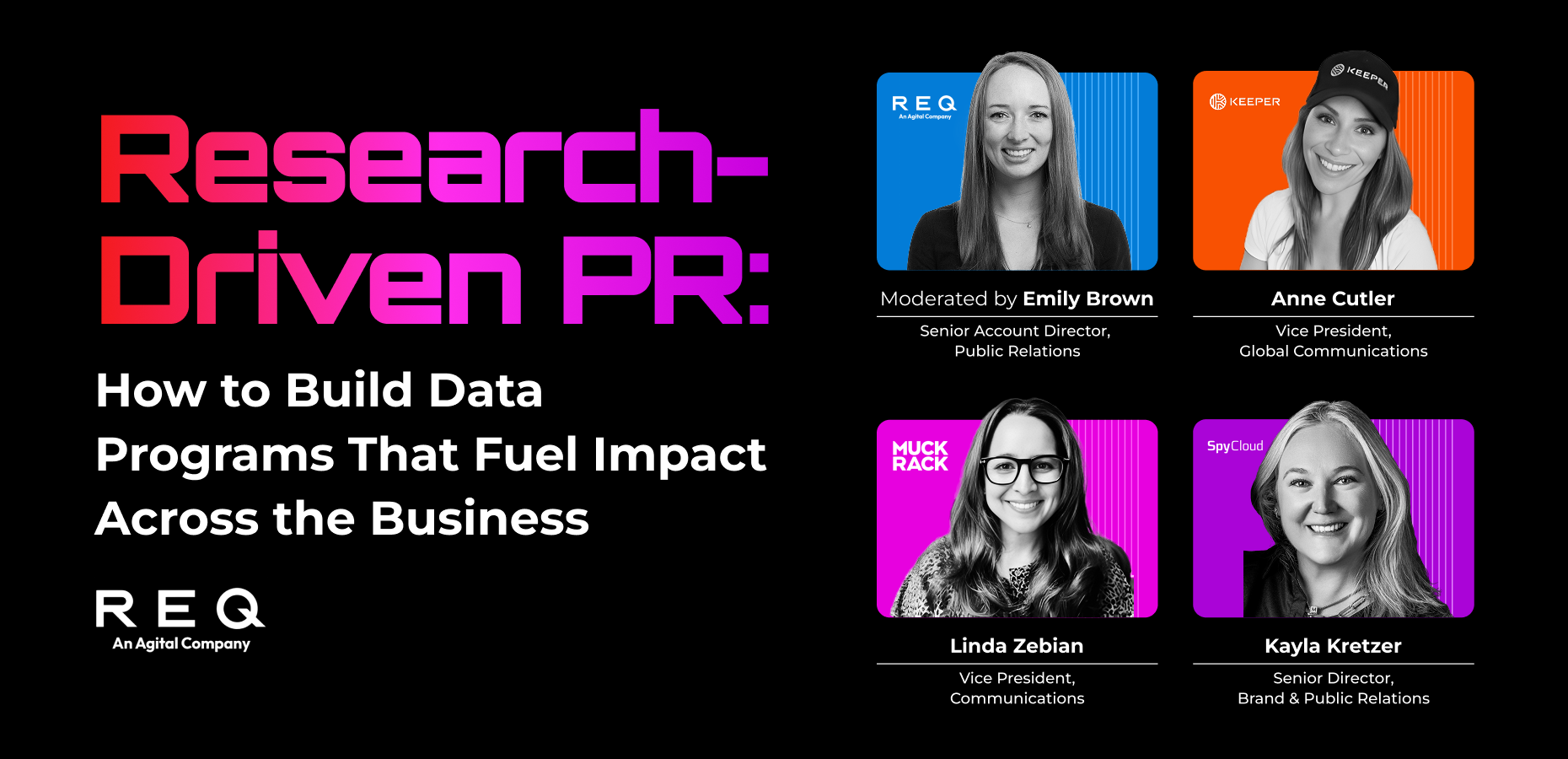
Research-Driven PR: How to Build Data Programs That Fuel Impact Across the Business

In today’s media environment—crowded with reports, rankings, and endless streams of metrics—brands are under pressure to deliver research that stands out and drives real value. That challenge framed our latest REQ webinar, where communications leaders from Keeper Security, Muck Rack, and REQ client SpyCloud shared how they design and activate data programs that generate headlines, influence lead generation and strengthen customer understanding. 

As moderator Emily Brown Theado noted at the outset, “We’re witnessing just how saturated the market is becoming with data… it’s becoming harder and harder for brands to leave their mark.” The panel explored what it takes to break through this noise with research that is timely, credible, and strategically aligned.

Key Takeaways

Research must serve the full funnel—not just PR.

All three panelists emphasized that research is most powerful when deeply integrated across the organization. Anne Cutler, Vice President of Global Communications at Keeper Security, shared that their research “permeates every single thing that we do,” informing the editorial calendar, product marketing, SEO, sales collateral, and roadmap validation. SpyCloud’s Kayla Kretzer, Senior Director of Brand & Public Relations, echoed this holistic view, highlighting how internal threat intelligence and external surveys work together to fuel SpyCloud’s ongoing content, campaign strategy, and media storytelling.

Blend subjective ‘headline’ questions with objective insights.

To create strong media hooks without sacrificing depth, Cutler recommends intentionally balancing question types. Subjective questions often yield the “sexy statistics” journalists love, she said, while objective questions tie findings back to real industry challenges and product relevance. This mix helps ensure both news value and lasting utility.

Trends matter—so do timeless questions.

Linda Zebian, Vice President of Communications at Muck Rack, explained how consistency in survey design pays off. Their annual State of Journalism study asked the same social media question for years—even when the answer never changed—until one year it did. “Suddenly LinkedIn surpassed Twitter,” she said, “and that became the headline.” The lesson: maintain core benchmark questions while layering in new ones to capture emerging behaviors.

Creativity makes research memorable.

From SpyCloud’s space-themed reports to Keeper’s “cybersecurity animals” storylines to AI-driven video explainers, panelists agreed that creative packaging helps data travel further. Short videos, graphics, GIFs, and thematic narratives make complex findings more approachable and more shareable across social platforms.

Accessibility is essential.

Gating strategies are evolving. While some B2B content may warrant short-term gating, most research performs better when widely accessible. As Cutler put it, “The entire goal is to get that information out there.” Muck Rack also highlighted the importance of publish-on-page content so AI and search engines can crawl key stats.

Closing Thoughts

While each panelist represented a different brand and audience, they shared a common belief: effective research programs are built with intention, empathy, and a genuine desire to answer real industry questions. As Zebian summarized, “Don’t create research just to get into the game—have a purpose outside of getting media attention.” When brands prioritize value over vanity, research becomes more than a PR asset—it becomes a strategic engine for insight, credibility, and long-term growth.


You can listen to the full discussion below – or visit the REQ YouTube channel for this and other insightful webinars. 

If you have any questions about your research strategy going into 2026, we’d love to chat with you! Reach out to our team to schedule a call with one of our PR experts and see how revamping your approach can lead to real results.

Let’s talk.

Name